Megawatt charging for trucks: the MCS standards are here — what changes for charger makers
With IEC TS 63379 published in January 2026 and IEC 61851-23-3 following, the Megawatt Charging System now has an international standard base. Up to 3 000 A and 1 250 V at the vehicle — 3.75 MW. What the standards cover, what is still open and what it takes to test an MCS charger.

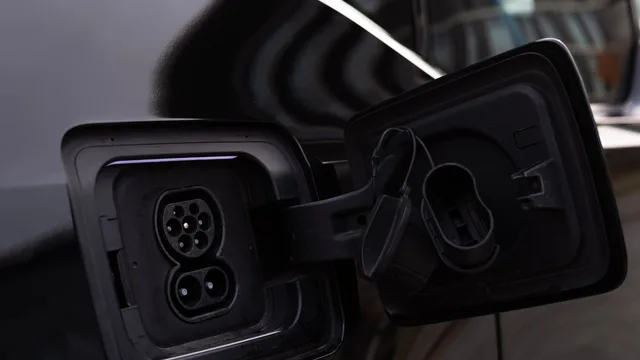
- 01IEC TS 63379:2026 (published 28 January 2026) defines the MCS connector, vehicle inlet and cable assembly: up to 1 500 V DC and 3 000 A, with thermal sensing.
- 02IEC 61851-23-3:2026, reported published in August 2026, sets the requirements for MCS charging equipment; the vehicle side is limited to 1 250 V DC.
- 03Communication runs over 10BASE-T1S automotive Ethernet with ISO 15118-20 — not the PLC used in CCS.
- 04SAE J3271 (Technical Information Report, 2025) describes the whole system for North America.
- 05Testing needs current sources several times larger than for CCS, new reference standards and calibrated metering above 600 A.
Why trucks need a new plug
CCS was designed for cars. A long-haul truck with a battery of 600 kWh or more needs far higher power to recharge during a driver’s legal rest break. The Megawatt Charging System (MCS), developed under the CharIN association since 2018, raises the limits to 3 000 A and 1 250 V at the vehicle — a theoretical 3.75 MW.
The standards at a glance
| Document | Status | Scope |
|---|---|---|
| IEC TS 63379:2026 | Published 28 January 2026 (Technical Specification, ed. 1.0) | Vehicle connector, inlet and cable assembly; up to 1 500 V DC / 3 000 A; thermal sensing |
| IEC 61851-23-3:2026 | Reported published August 2026 | Charging equipment (EVSE) for MCS; supply up to 1 000 V AC or 1 500 V DC; vehicle side max. 1 250 V DC |
| ISO 15118-20 (+ ISO 15118-10) | Published | Charger–vehicle communication; 10BASE-T1S physical layer |
| SAE J3271 | Technical Information Report, 2025 | Whole system, North American focus, including interoperability testing |
Two points are still open. Bidirectional power transfer is under consideration in IEC 61851-23-3, and IEC TS 63379 is a Technical Specification — a full International Standard may follow after field experience (stability date 2028).
What changes compared with CCS
- Current and cooling. Rated current depends on how cable, connector and vehicle inlet are cooled. Temperature monitoring with standardised sensing is part of the connector specification.
- Communication. MCS uses single-pair automotive Ethernet (10BASE-T1S) with ISO 15118-20 instead of power-line communication. Plug & Charge requires TLS 1.3.
- Metering. In Germany, public chargers need calibrated DC meters under calibration law. Few certified meters cover currents above 600 A today, so meter selection becomes a design question for MCS stations.
Where the market stands
Megawatt charging is moving from pilots to products. MAN reported megawatt charging of its eTGX in Germany’s HoLa project, where a charge point delivers up to 1.2 MW, and planned series production of MCS-equipped trucks during 2026. In China, manufacturers pursue their own megawatt routes: BYD presented an electric truck with 1.5 MW charging in September 2026.
What it takes to test an MCS charger
- Power and current sources of 3 000 A at 1 250–1 500 V — about six times the current of today’s CCS test setups.
- Thermal tests of connector and cable under continuous high current, with active cooling of the test setup.
- Insulation and protection tests at 1 500 V DC.
- EMC including the unshielded twisted-pair communication lines.
- Communication and interoperability with 10BASE-T1S protocol analysers instead of PLC tools.
- Metering accuracy across the full current range, where calibration law applies.
TSINGHU tests chargers up to 3.75 MW — the full MCS power range — including safety, EMC, interoperability and metrology, so MCS products can be verified before they go to the first fleet customers.
FAQ
What is the maximum power of the Megawatt Charging System?
MCS is specified for up to 3 000 A and 1 250 V DC at the vehicle, a theoretical 3.75 MW. The connector itself (IEC TS 63379) is rated up to 1 500 V DC and 3 000 A.
Which standards define MCS?
IEC TS 63379:2026 for the connector, inlet and cable; IEC 61851-23-3:2026 for the charging equipment; ISO 15118-20 for communication over 10BASE-T1S; and SAE J3271 for North America.
Is MCS bidirectional?
Bidirectional power transfer is still under consideration in IEC 61851-23-3. The communication standard ISO 15118-20 already supports it, so later editions are expected to address V2G for trucks.
Sources
- IEC webstore: IEC TS 63379:2026 — vehicle couplers and cable assemblies up to 1 500 V DC / 3 000 A (published 2026-01-28)
- EV Engineering & Infrastructure: CharIN announces publication of IEC TS 63379
- Fleetpoint (Sep 2026): IEC megawatt charging standard and IEC 61851-23-3:2026
- ZERA: Megawatt charging — requirements for testing technology
- Megawatt Charging System — overview and history
- Electrek (14 Sep 2026): BYD electric truck with 1.5 MW charging
 CertificationEU CE & TÜV Marks