Bidirectional EV chargers (V2G/V2H): a certification roadmap for Europe and North America
A V2G charger is a charger and a grid-connected generator in one box. That means product safety, a grid code, communication and — in Europe — registration of certificates. This guide sorts the standards by architecture and market, and lists what to test before you apply.
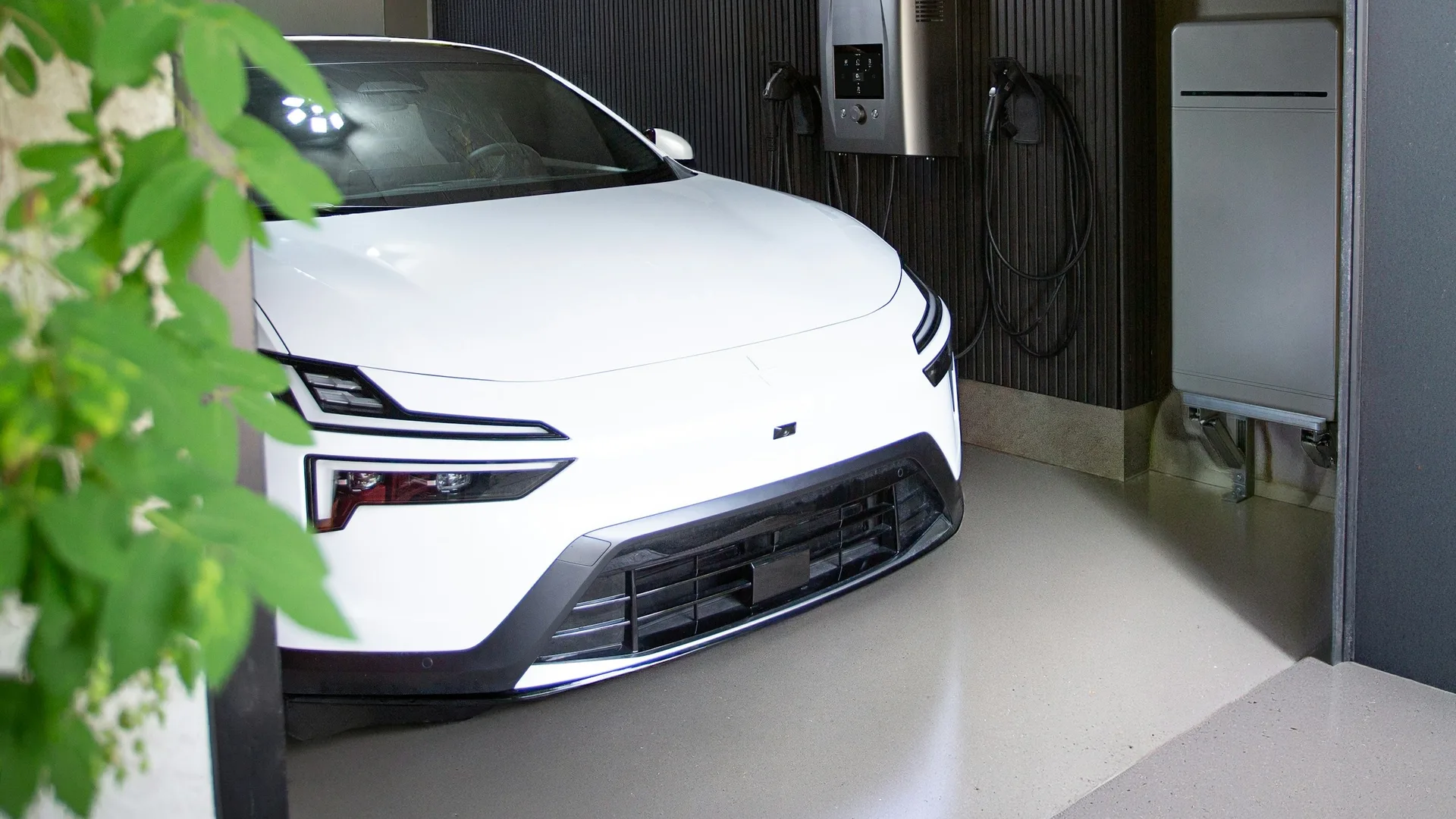
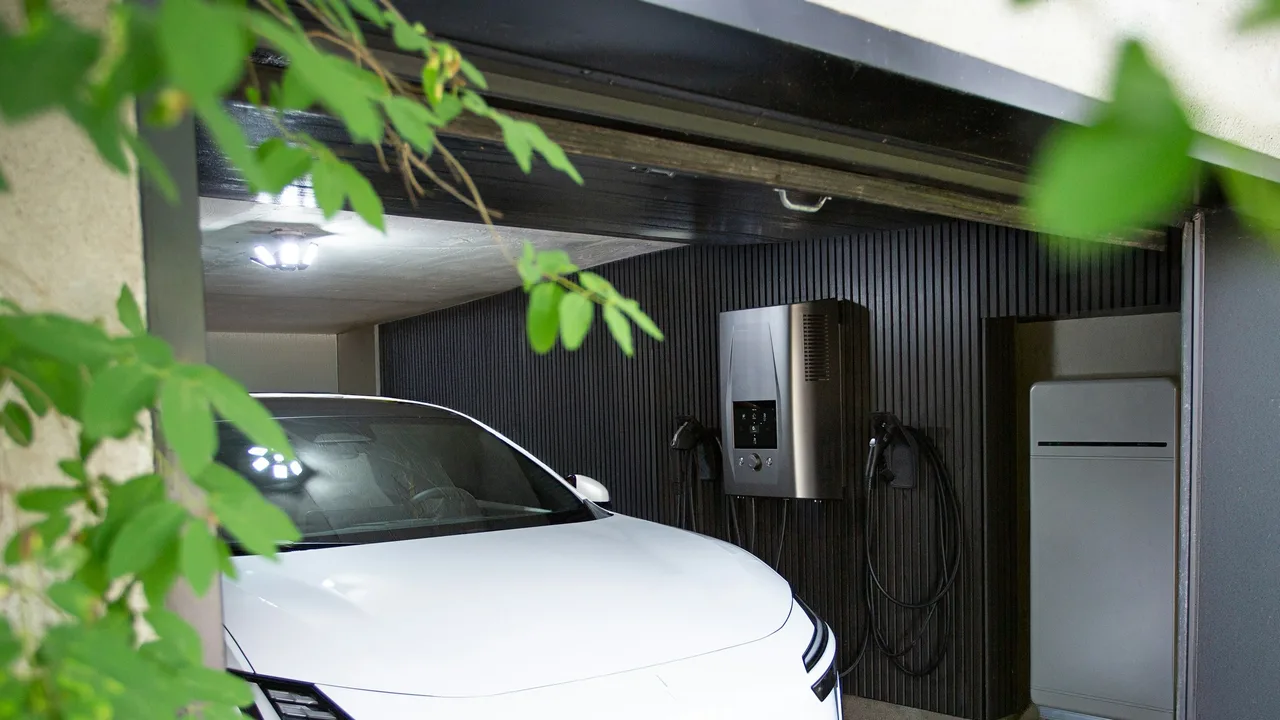
- 01DC bidirectional chargers carry the inverter themselves and certify as a generating unit; with AC bidirectional charging the inverter sits in the vehicle.
- 02Germany’s VDE-AR-N 4105:2026 treats a V2G charger as storage while a V2G-capable vehicle is connected; for DC chargers the charger certificate is enough.
- 03ISO 15118-20 is the communication backbone; its Amendment 1 (July 2026) adds bidirectional power transfer for AC. OCPP 2.1 (January 2025) brings V2X to the back end.
- 04In North America, UL 9741 covers bidirectional charging equipment, UL 1741 SB grid support, and UL 1741 SC (May 2026) AC chargers that supervise SAE J3072 vehicles.
- 05Plan one hardware platform with switchable grid parameter sets — the standards are still moving.
Two architectures, two certification paths
| DC bidirectional | AC bidirectional | |
|---|---|---|
| Where is the inverter? | In the charger | In the vehicle (on-board charger) |
| What feeds the grid? | The charger | The vehicle, through the charger |
| Grid-code evidence | Charger certificate as a generating unit | Split between charger and vehicle — still being settled |
| Typical use | Wallboxes for V2H/V2G, fleet depots | Wallboxes for vehicles with bidirectional on-board chargers |
DC is the mature route today: the charger behaves like a PV or storage inverter and can be certified the same way.
Europe
Product safety and EMC. IEC 61851-23 (DC charging equipment, 2023 edition) already covers bidirectional operation for one of its system types; requirements for others are under consideration. The fourth edition of IEC 61851-1, still in preparation, adds bidirectional power transfer for AC equipment. EMC follows IEC 61851-21-2. Products with Wi-Fi or a mobile modem also need EN 18031 under the Radio Equipment Directive.
Grid connection. EN 50549-1 sets the European baseline; national rules apply on top. In Germany, VDE-AR-N 4105:2026 treats a bidirectional charger as storage while a V2G-capable vehicle is connected. It needs a unit certificate and an NA-protection certificate, registered in the ZEREZ database. For DC chargers the charger certificate is sufficient — the vehicle counts as a battery. For AC, the split between charger and vehicle is not yet resolved.
Communication. ISO 15118-20 is mandatory for bidirectional power transfer; Amendment 1, published on 13 July 2026, adds AC bidirectional operation. OCPP 2.1, released in January 2025, adds a bidirectional functional block for the back end.
North America
- UL 9741 — bidirectional EV charging equipment.
- UL 1741 SB — grid-support functions under IEEE 1547 and IEEE 1547.1, as required by utilities.
- UL 1741 SC, released on 21 May 2026 — AC bidirectional chargers that supervise vehicles with SAE J3072 on-board inverters, without certifying a fixed charger–vehicle pair.
- California Rule 21 is being updated for V2G AC: the utilities must propose new rules within eight months of the working group reconvening in August 2026; an interim path remains until then.
What to test before you apply
| Function | Typical basis | What is checked |
|---|---|---|
| Anti-islanding | VDE-AR-N 4105 / EN 50549 / IEEE 1547.1 | Disconnection when the grid is lost, in charge and discharge |
| Voltage and frequency ride-through | National grid code | Staying connected through faults and frequency gradients |
| Reactive power, Q(U) / volt-var | National grid code | Control behaviour in both power directions |
| Power reversal | VDE-AR-N 4105:2026 | Smooth change from charging to discharging |
| Communication | ISO 15118-20, OCPP 2.1 | Interoperability with vehicles and back ends |
| Safety and EMC | IEC 61851 series | Both power directions |
| Metering of exported energy | Local rules | Accuracy where energy returned to the grid is billed |
Practical advice
- One platform, several codes. Store national parameter sets in firmware and keep the configuration traceable.
- Start with DC if you need certificates now. The AC split between charger and vehicle is still being settled in Europe and the US.
- Test interoperability early. ISO 15118-20 implementations still differ; test against several vehicles before formal certification.
- Watch the moving parts: IEC 61851-1 Ed. 4, the next IEC 61851-23 edition and the Rule 21 update.
TSINGHU tests bidirectional chargers for safety, EMC, grid functions and communication interoperability in China, and prepares the evidence certification bodies in Europe and North America need.
FAQ
Does a V2G charger need a grid-code certificate in Germany?
Yes. Under VDE-AR-N 4105:2026 it counts as storage while a V2G-capable vehicle is connected and needs a unit certificate and an NA-protection certificate registered in ZEREZ. For DC chargers the charger certificate is sufficient.
Which communication standard is required for bidirectional charging?
ISO 15118-20. Its Amendment 1, published in July 2026, adds AC bidirectional power transfer. OCPP 2.1 supports bidirectional charging between the charger and the operator’s back end.
What is UL 1741 SC?
A supplement released in May 2026 that certifies AC bidirectional chargers acting as supervisors for vehicles with SAE J3072 on-board inverters, so vehicle and charger no longer have to be certified as a fixed pair.
Sources
- VGIC: UL 1741 SC (21 May 2026) and ISO 15118-20 Amendment 1 (13 July 2026) — two critical links for V2G AC
- German standardisation roadmap on bidirectional charging (October 2024)
- Netze BW (2026): bidirectional chargers under VDE-AR-N 4105:2026
- Open Charge Alliance: OCPP 2.1 is now available (January 2025)
- BSI: IEC 61851-1 Ed. 4 draft — bidirectional power transfer for EV supply equipment
 CertificationEU CE & TÜV Marks