GB 46519 from 1 November: China’s first mandatory energy-efficiency rules for EV chargers
From 1 November 2026, chargers sold in China must meet minimum efficiency and standby-power limits under GB 46519-2025. What the standard covers, how DC chargers are graded, the 7 W standby cap for AC chargers, the 12-month transition and what to measure before certification.
- 01GB 46519-2025 was issued on 5 October 2025 and applies from 1 November 2026; it is China’s first mandatory energy-efficiency standard for EV supply equipment.
- 02It covers off-board conductive DC chargers (integrated and split) and AC chargers, with a vehicle-side voltage of up to 1 500 V DC.
- 03DC chargers are graded 1 to 3 on charging efficiency, standby power and operating power; grade 3 is the minimum allowed. Industry summaries give 96.5 %, 95.5 % and 94.5 % for integrated units.
- 04AC chargers must keep standby power at or below 7.0 W.
- 05Products manufactured before 1 November 2026 have until 1 November 2027 (the 13th month after the effective date).
Why a charger efficiency standard now
China has several million public charge points, and every percentage point of conversion loss in a fast charger is paid for by operators and drivers. GB 46519-2025, issued by SAMR and SAC on 5 October 2025, sets the first mandatory floor. The Sino-German Energy Partnership cites an expected saving of 1 billion kWh a year once the standard is fully implemented by 2030.
It takes effect on 1 November 2026 — the same day as the revised charger EMC standard GB/T 18487.2-2026.
Scope
| Included | Excluded |
|---|---|
| Off-board conductive supply equipment, grid side up to 1 000 V AC | Equipment supplied from a DC grid |
| DC chargers, mode 4 (case C): integrated and split designs | Mode 2 cable control boxes (IC-CPD) |
| AC chargers, mode 3 (case B or C) | Combined AC/DC units, certain integrated charging-and-storage units |
| Vehicle side up to 1 000 V AC or 1 500 V DC | Automatic top- or bottom-contact charging |
What is measured
DC chargers are graded on three indicators: charging efficiency, standby power and operating power (expressed per 100 A of rated current). Separate tables apply to integrated chargers and split chargers with remote dispensers. Grade 1 is the most efficient; grade 3 is the minimum allowable value — anything below it may not be sold.
Industry summaries of the tables give, for integrated DC chargers:
| Grade | Charging efficiency | Standby power |
|---|---|---|
| 1 | ≥ 96.5 % | ≤ 30 W |
| 2 | ≥ 95.5 % | ≤ 30 W |
| 3 (minimum) | ≥ 94.5 % | ≤ 30 W |
The same summaries cite a standby limit of 48 W for split chargers. The efficiency is a weighted value over several operating points — reported as three output voltages (400, 600 and 800 V) and three load levels (20, 50 and 100 %). Check the exact values and weights against Tables 1 and 2 and Annex A of the standard before you design to them.
AC chargers have one requirement: standby power of no more than 7.0 W, tested to Annex B.
Results are rounded to one decimal place for efficiency and standby power, and to an integer for operating power per 100 A.
Transition
For products manufactured before 1 November 2026, the requirements apply from the 13th month after the effective date — that is, from 1 November 2027. New production from 1 November 2026 must comply immediately.
What it means for design
- Power modules. At 94.5 % for the whole charger, rectifier and DC/DC losses, cable losses and auxiliary power all count. Many manufacturers are moving to silicon-carbide modules to reach grade 1.
- Standby. Displays, cooling fans, communication modules, payment terminals and insulation monitoring all draw power while no vehicle is connected. Sleep modes need to be designed in, not added later.
- Split systems. Dispensers in standby count separately — a site with many dispensers per power cabinet multiplies the loss.
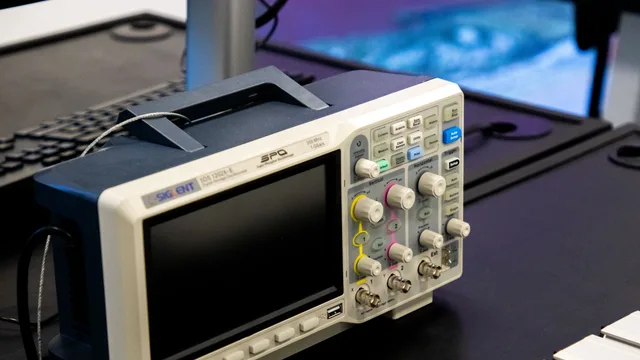
- Measurement. Efficiency is a small difference between two large numbers. Power analysers with calibrated accuracy at high DC current are needed to show a margin above the grade thresholds.
Preparing for certification
- Measure efficiency at all specified operating points on a production-equivalent sample.
- Measure standby power with all accessories fitted as shipped.
- Document the grade per model and keep test conditions traceable.
- Combine the efficiency test with safety (GB/T 18487.1), EMC (GB/T 18487.2-2026) and CCC evidence to avoid repeat sample shipments.
TSINGHU measures charger efficiency and standby power alongside safety, EMC and interoperability tests, for chargers up to 3.75 MW, so one test campaign covers GB 46519 and the other requirements for the Chinese market.
FAQ
Does GB 46519 apply to chargers already installed?
No. It applies to products placed on the market. Units manufactured before 1 November 2026 may still be sold until 1 November 2027; from then on every product sold must meet it.
Do AC wallboxes need an efficiency grade?
No efficiency grade — AC chargers only have a standby power limit of 7.0 W.
Are the efficiency thresholds the same for split chargers?
The standard has separate tables for integrated and split DC chargers. Industry summaries cite a higher standby allowance (48 W) for split chargers; check the efficiency values in Table 2 of the standard.
Sources
- GB 46519-2025 Minimum allowable values of energy efficiency and energy efficiency grades for EV power supply equipment — scope, contents and implementation clause
- Sino-German Energy Partnership (18 Nov 2025): dialogue on EV charger energy efficiency; expected savings of GB 46519
- Tencent News (8 Jan 2026): reading of the charger energy-efficiency rules and industry impact
- Industry summary of GB 46519-2025 grade thresholds and standby limits
- EE Times China: GB/T 18487.2-2026 charger EMC standard (also in force 1 Nov 2026)
 CertificationChina CQC & CCC