Balcony solar in Germany: certifying plug-in PV kits under DIN VDE V 0126-95
Germany now has a product standard for balcony power plants. DIN VDE V 0126-95 sets 800 VA at the inverter, 960 W of modules on a household plug and 2 000 W on a special energy plug, and new shock-protection tests at the plug pins. What the standard requires and how inverter and kit makers can prove compliance.
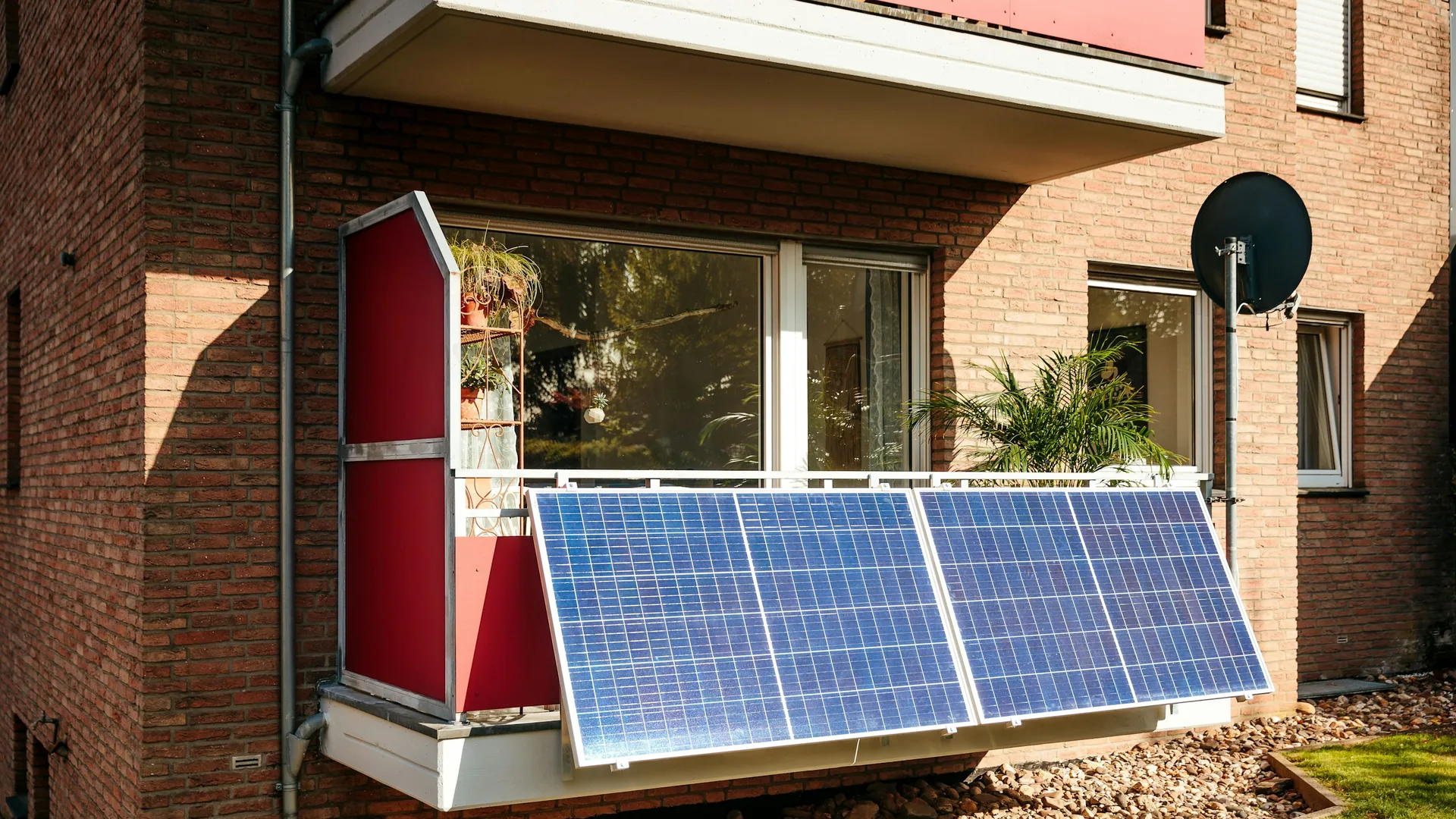
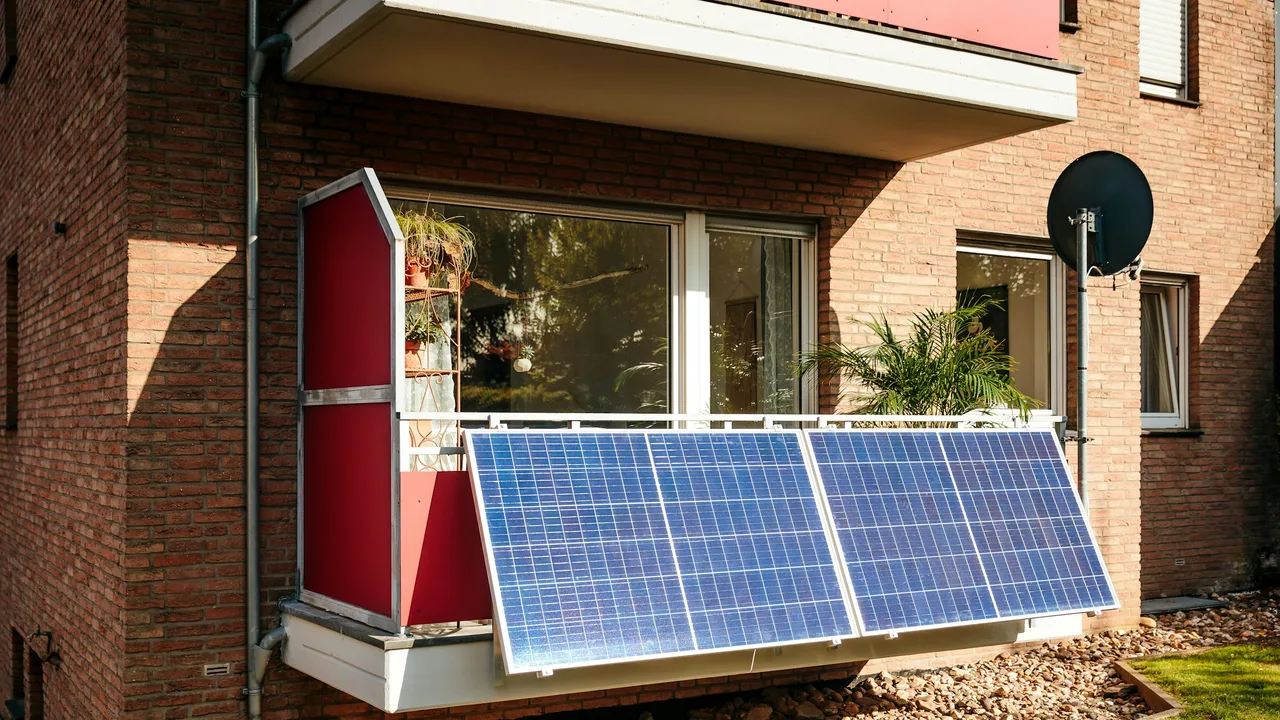
- 01DIN VDE V 0126-95 (VDE V 0126-95):2025-12 is the first product standard for plug-in solar devices: modules, grid-tied inverter, cable, plug and mounting as one system.
- 02Limits: inverter feed-in up to 800 VA; total module power up to 960 W with a household plug, or up to 2 000 W with a special energy plug installed by an electrician.
- 03After unplugging, the voltage at the plug pins must fall to 34 V or less within 1 second, and the inverter must switch off within 100 milliseconds.
- 04The connecting cable must be at least 5 m long; multi-socket strips are not allowed, and DC connectors must come from the same manufacturer and product family.
- 05Kits with batteries are not covered; DKE/K 373 has started a separate part for plug-in devices with storage.
Why a product standard
Germany’s “Balkonkraftwerke” became a mass market after Solarpaket I removed grid-operator registration for small systems. What was missing was a common technical basis: until now, each component had its own standard, but nothing described the safety of the whole kit plugged into a household socket by a lay user.
DIN VDE V 0126-95 (VDE V 0126-95):2025-12 closes that gap. It treats a plug-in solar device as one product made of at least one PV module, at least one grid-tied inverter, a connecting cable, a plug device and a mounting system. It is a pre-standard (“Vornorm”); manufacturers can declare conformity once their product has been developed and tested to it, either in-house or by a third party, and third parties can certify it. Devices already in operation are not affected.
The power limits
| Household plug (Schuko) | Special energy plug (e.g. DIN VDE V 0628-1) | |
|---|---|---|
| Inverter feed-in | ≤ 800 VA | ≤ 800 VA |
| Total module power | ≤ 960 W (800 W + 20 %) | ≤ 2 000 W |
| Installation | by the user | socket installed by an electrician, who checks the circuit |
The module limit with a household plug exists because a final circuit is not protected against the fed-in current — the house wiring has to carry the sum of grid current and solar current. Larger systems are not plug-in devices under the standard and must be installed as normal PV systems by a specialist.
Plugs and shock protection
The standard allows household plugs again, under conditions. Permitted variants:
- a modified household plug with protective sleeves on the contacts;
- a modified household plug with an internal disconnect switch;
- a household plug combined with insulation and safe disconnection in the inverter;
- the special energy plug, with a mandatory pin assignment to prevent dangerous mismatches.
The key safety test: when the device is unplugged, the touchable voltage at the plug contacts must fall to 34 V or less within 1 second, and the inverter must switch off within 100 ms.
Further product requirements
- Cable: at least 5 m, so no extension is needed in typical use; only extensions approved by the manufacturer may be used. Multi-socket strips are not allowed.
- DC connectors: only connectors of the same manufacturer and product family may be mated — mismatched “compatible” connectors have caused overheating and fires.
- Mechanical safety: the manufacturer must state permitted mounting locations and methods, and prove the mounting system’s static suitability for wind and snow loads for every stated method.
- Labelling: the plug must carry a notice that only one plug-in device may be connected per household.
- Documentation: installation and operating instructions that let a lay user set the device up safely.
The inverter: what else applies
The product standard sits on top of the usual requirements for the inverter:
- Grid connection: VDE-AR-N 4105 governs connection to the low-voltage grid, including grid and system protection, and the permitted apparent power.
- CE marking: electrical safety (typically EN 62109-1/-2), EMC for residential environments (EN IEC 61000-6-1 and -6-3) and RoHS.
- Radio: micro-inverters with Wi-Fi or Bluetooth fall under the Radio Equipment Directive, including the EN 18031 cybersecurity requirements.
A test plan for kit and inverter makers
- Verify the plug-pin voltage decay (≤ 34 V within 1 s) and the inverter shut-off (≤ 100 ms) for each plug variant.
- Confirm the 800 VA limit at all operating points and the module power declared for the kit.
- Check cable length, connector pairing and labelling against the standard.
- Compile static evidence for each mounting method.
- Run VDE-AR-N 4105, safety, EMC and — for connected devices — RED/EN 18031 tests in the same campaign.
TSINGHU tests micro-inverters and plug-in PV kits in China against these requirements — product safety, the plug-pin protection tests, grid code, EMC and radio cybersecurity — and prepares the test documentation manufacturers need for the German market.
FAQ
Is DIN VDE V 0126-95 mandatory?
It is a pre-standard, not a law. But it is now the technical reference that landlords, insurers and funding schemes can point to, and manufacturers who declare conformity must meet all of it.
Can I sell a 2 000 W kit with a normal household plug?
No. With a household plug the module power is limited to 960 W. Up to 2 000 W requires a special energy plug and socket installed by an electrician. A future revision may allow more with an additional communication and protection device.
Does the standard cover balcony kits with batteries?
No. Plug-in devices with energy storage need additional requirements; the DKE committee K 373 has started work on a separate part.
Sources
- DKE (17 Dec 2025): FAQ on the plug-in solar product standard DIN VDE V 0126-95
- DIN: Balkonkraftwerke — the new product standard for plug-in solar explained
- ADAC (Jan 2026): DIN VDE V 0126-95 — new rules for balcony power plants and Schuko plugs
- Energie-Experten: new DIN VDE V 0126-95 creates a framework for balcony PV
 CertificationEU CE & TÜV Marks